Composition and health9 min
Water passport: a glossary of mineralisation, pH, hardness and ionsWhat TDS, pH, hardness, CO₂, calcium, magnesium, sodium and other label lines mean, with EU thresholds in mg/L.
Composition compared
Data updated 24 September 2026 · Sources: batch labels, GOST R 54316-2020, NSF laboratory report 2026 for Icelandic Glacial.
Scroll the table sideways
| Parameter | 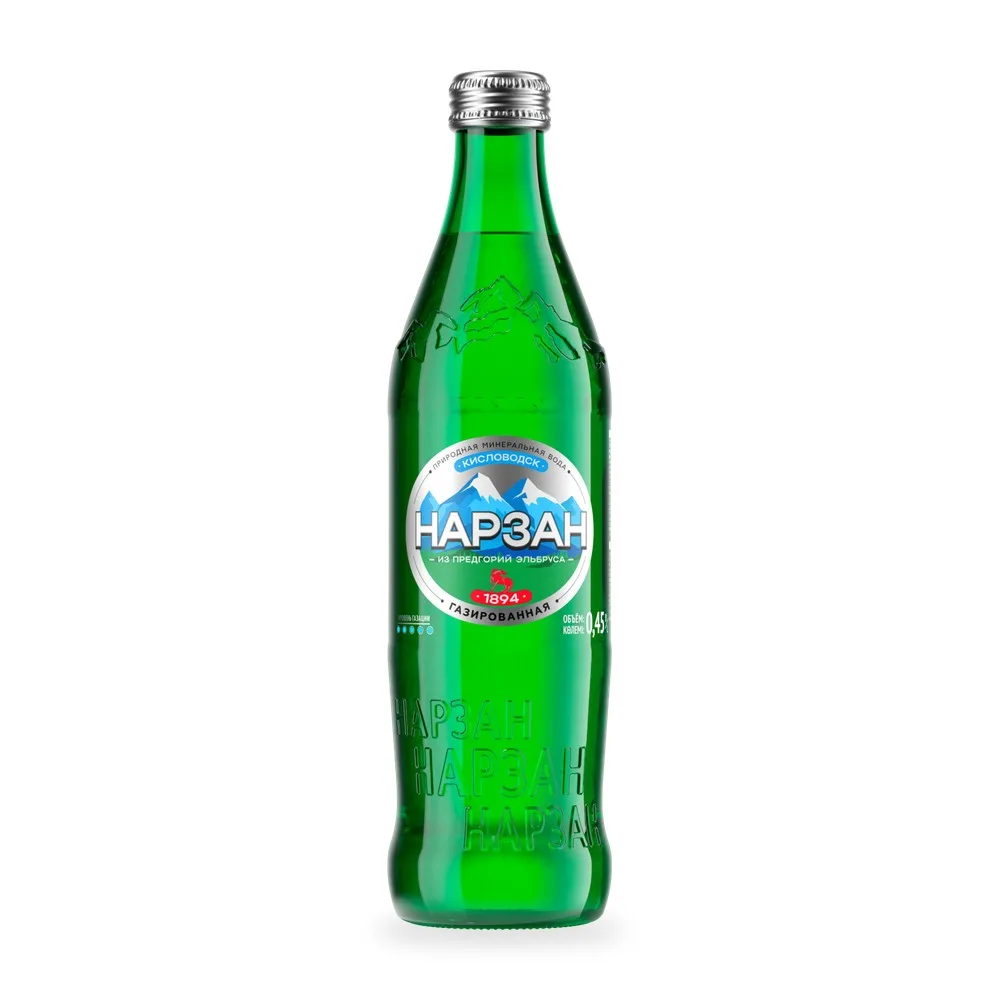 Narzan 0.45 L | 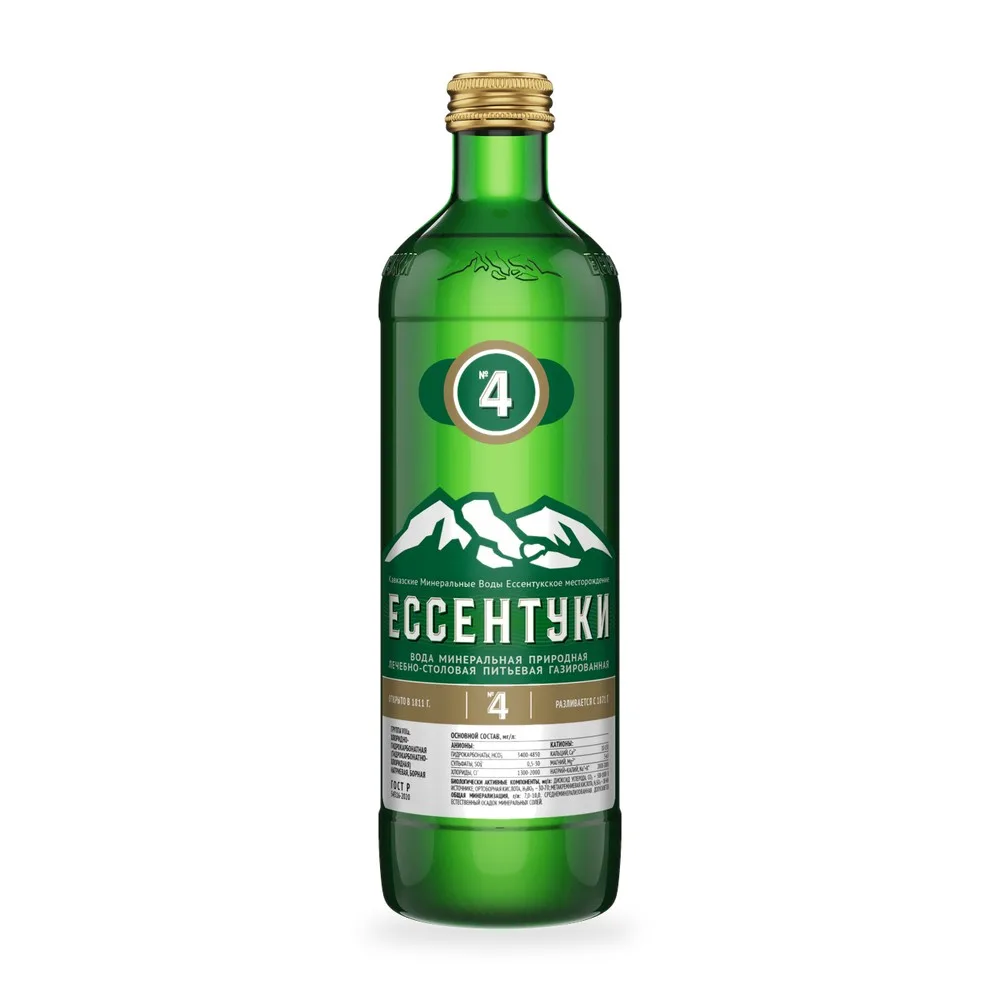 Essentuki No. 4 0.45 L | 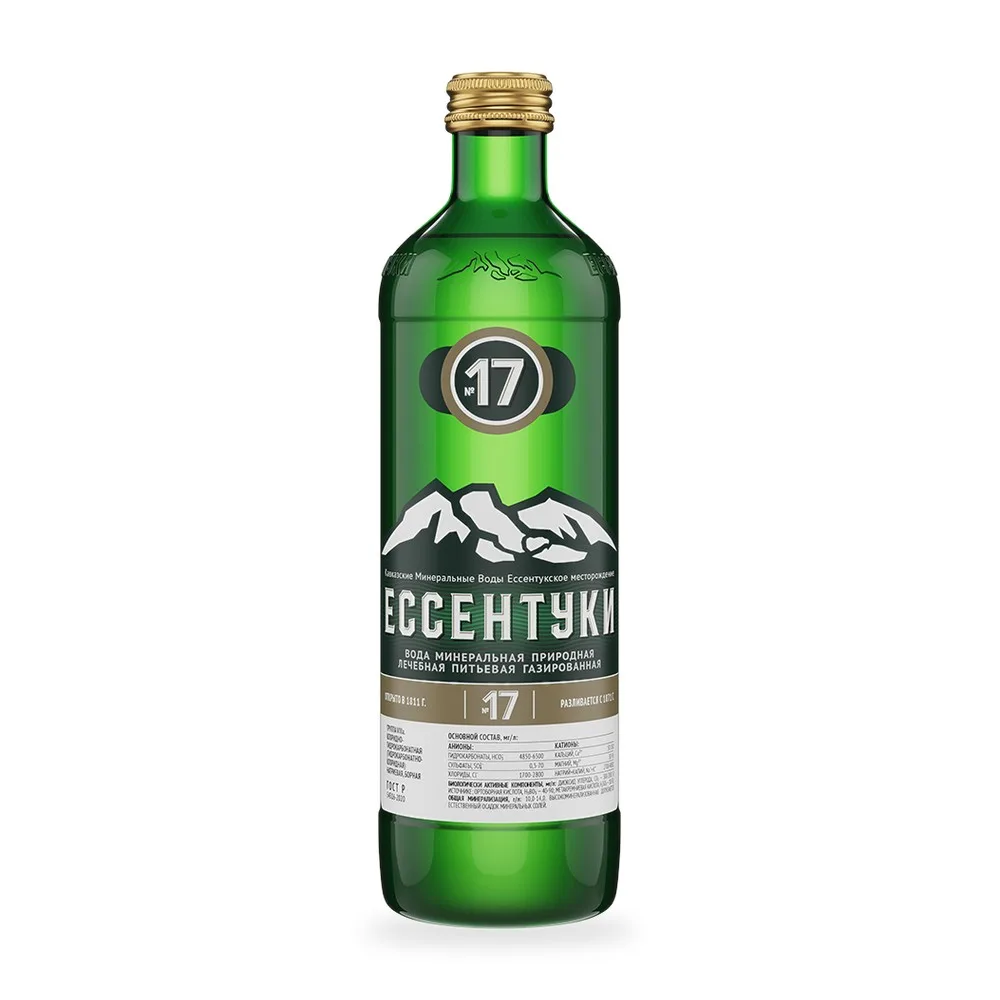 Essentuki No. 17 0.45 L | 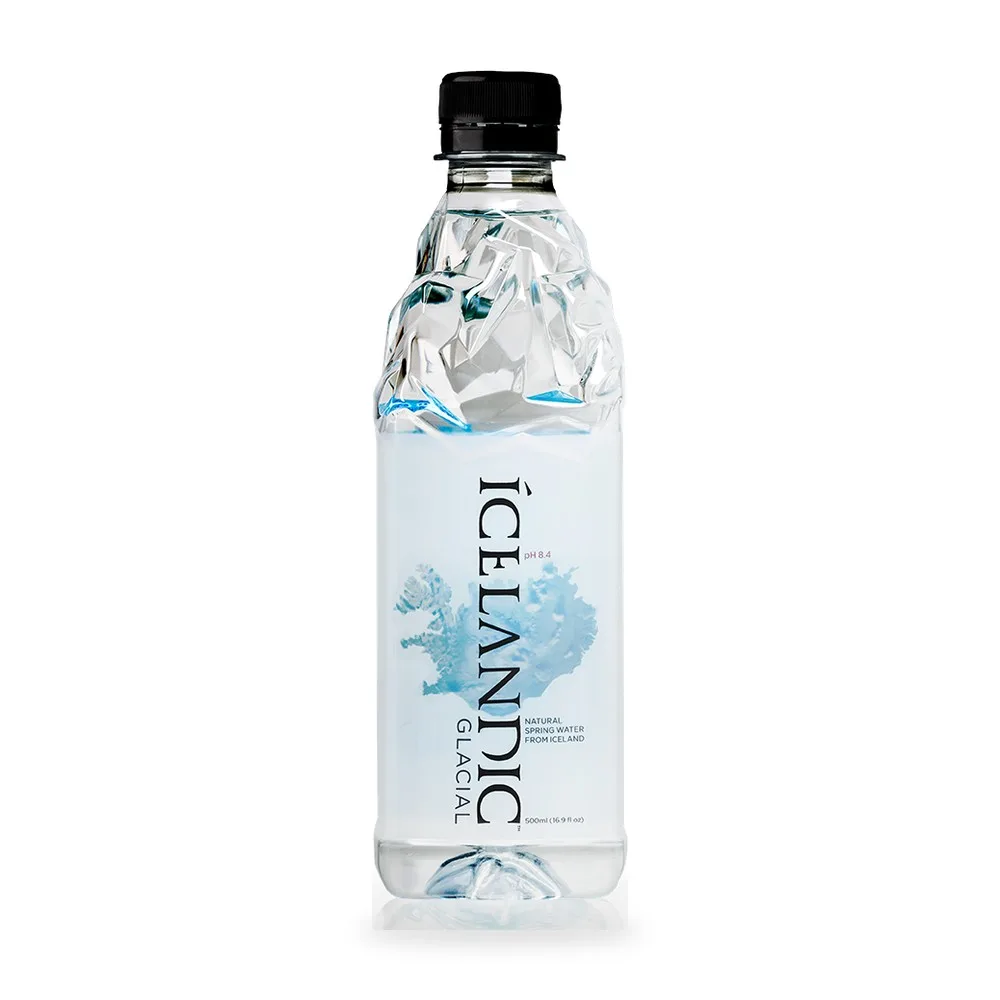 Icelandic Glacial 0.5 L | 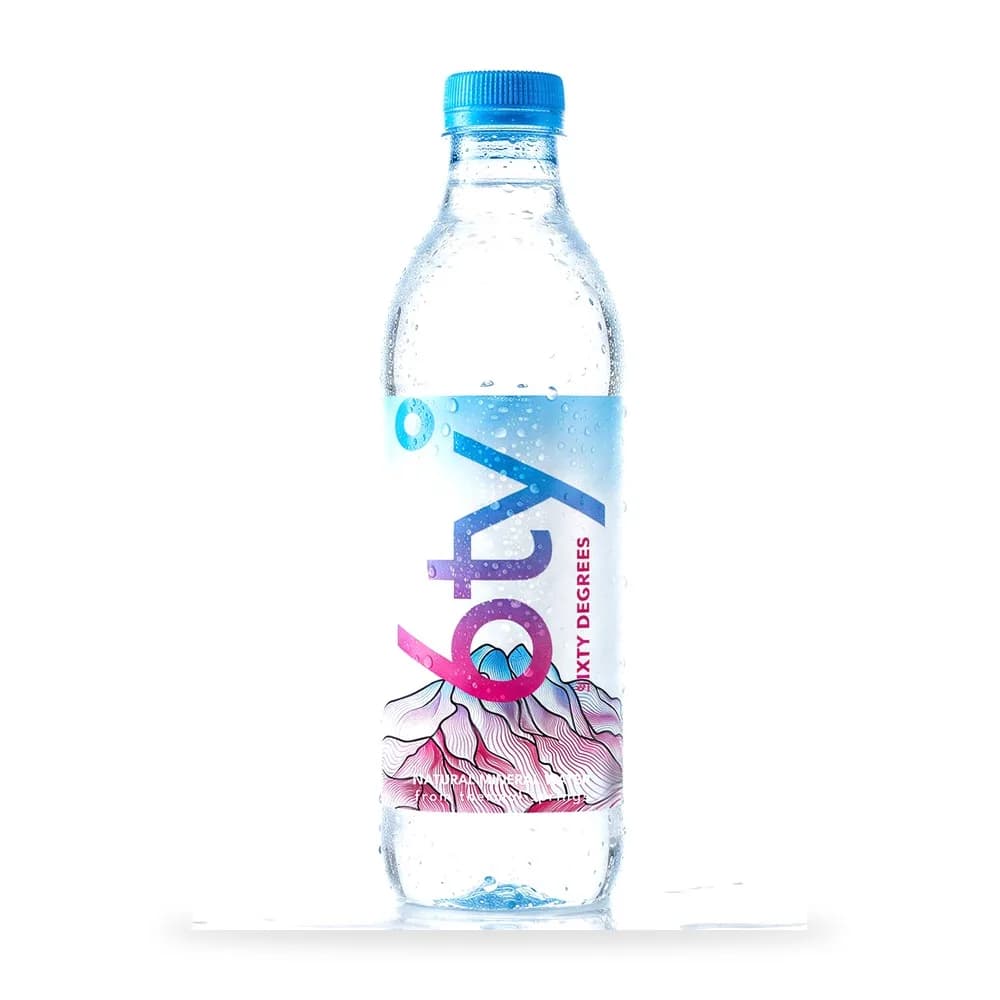 6ty° Sixty Degrees 0.52 L |
|---|---|---|---|---|---|
| About the water | |||||
| Use | Medicinal table water | Medicinal table water | Medicinal water | Table water | Table water |
| Origin | Natural mineral | Natural mineral | Natural mineral | Spring | Natural mineral |
| Ionic type | sulphate-bicarbonate (bicarbonate-sulphate), mixed cations | chloride-bicarbonate (bicarbonate-chloride) sodium, boric | chloride-bicarbonate (bicarbonate-chloride) sodium, boric | — | — |
| Country | Russia | Russia | Россия | Iceland | Thailand |
| Source | Kislovodsk deposit (Stavropol Krai), wells 107-D, 7-RE, 2B-bis | Essentuki (Stavropol Krai), wells No. 49-E, 57-RE-bis, 71 (bottle code E / T / X) | Ессентукское месторождение (Ставропольский край), скважина № 46 | Ölfus Spring (Hlidarendi, Ölfus), southwest Iceland | Underground geothermal spring, Chiang Dao district (Chiang Mai), depth over 200 m, 60 °C at surface |
| Carbonation | Natural | Added at bottling | Added at bottling | Still | Still |
| Bottled at source | — | — | — | Yes | — |
| Packaging | Glass, 450 ml | Glass, 450 ml | Glass, 450 ml | PET, 500 ml | PET, 520 ml |
| Key parameters | |||||
| Mineralisation | 2–3.5 g/Lhigh | 7–10 g/Lhigh | 10–14 g/Lhigh | 62–72 mg/Llow | — |
| pH | — | — | — | 8.4–8.49alkaline | 8.3alkaline |
| Hardness, meq/L | 14.1–44.8 | 0.9–12.8 | 5–15.3 | 0.5 | 1.1–2.1 |
| CO₂, g/L | 1–3.5 | 0.5–1.8 | 0.5–2.35 | — | — |
| Cations, mg/L | |||||
| Calcium (Ca²⁺) | 200–600 | 10–150 | 50–150 | 5.5 | 15–30 |
| Magnesium (Mg²⁺) | 50–180 | 5–65 | 30–95 | 2.2 | 4–7 |
| Sodium (Na⁺) | — | — | — | 11 | 40–60 |
| Potassium (K⁺) | — | — | — | 0.7 | 12–14 |
| Sodium + potassium | 50–450 | 2,000–3,000 | 2,700–4,000 | — | — |
| Lithium (Li⁺) | — | — | — | — | 0.01–0.1 |
| Anions and trace elements, mg/L | |||||
| Bicarbonates (HCO₃⁻) | 1,000–1,950 | 3,400–4,850 | 4,850–6,500 | 34.4 | 150–300 |
| Sulphates (SO₄²⁻) | 250–1,100 | 0.5–30 | 0.5–70 | 3.3 | 1–10 |
| Chlorides (Cl⁻) | 50–250 | 1,300–2,000 | 1,700–2,800 | 12 | — |
| Fluoride (F⁻) | — | — | — | — | 0.1–1 |
| Nitrates (NO₃⁻) | — | — | — | 0.09 | — |
| Silica (SiO₂) | — | — | — | — | 35–45 |
| Metasilicic acid (H₂SiO₃) | 5–80 | 10–60 | 10–50 | — | — |
| Boric acid (H₃BO₃) | — | 30–70 | 40–90 | — | — |
| Distinctive features | |||||
| By EU thresholds |
|
|
|
| — |
| Price | 80 ฿Buy | 110 ฿Buy | 110 ฿Buy | 60 ฿Buy | 12 ฿Buy |
This table is reference information based on producers’ data, not medical advice. Medicinal table water is taken in courses; if you have a chronic condition, discuss it with your doctor.
Composition and health9 min
Water passport: a glossary of mineralisation, pH, hardness and ionsWhat TDS, pH, hardness, CO₂, calcium, magnesium, sodium and other label lines mean, with EU thresholds in mg/L.
Composition and health8 min
What should and should not be in water: WHO, EU and Thai limitsMain minerals and the limits for nitrate, fluoride, arsenic, boron and lead under WHO, EU, Russian and Thai rules.
Composition and health7 min
Bicarbonate, chloride, sulphate: read the water type on a labelHow ionic names like "bicarbonate-chloride sodium" are formed, with Essentuki No. 4 and Narzan as examples.
How to choose7 min
Which water to drink when: daily, in the heat, with food and coffeeA quick guide: which lines of the composition table to check in each situation, from daily water to low-sodium diets.
How to choose7 min
How to drink mineral water: temperature, bubbles, how much and whenTable water vs medicinal-table water, how many glasses a day are fine, before or after meals, and when to ask a doctor.
How to choose7 min
How to read a mineral water label: mineralisation, pH, TDSFive lines on the label that tell you what kind of water you are holding.