How to choose · 7 min · 17 September 2026
How to read a mineral water label: mineralisation, pH, TDS
Five lines on the label that tell you what kind of water you are holding.
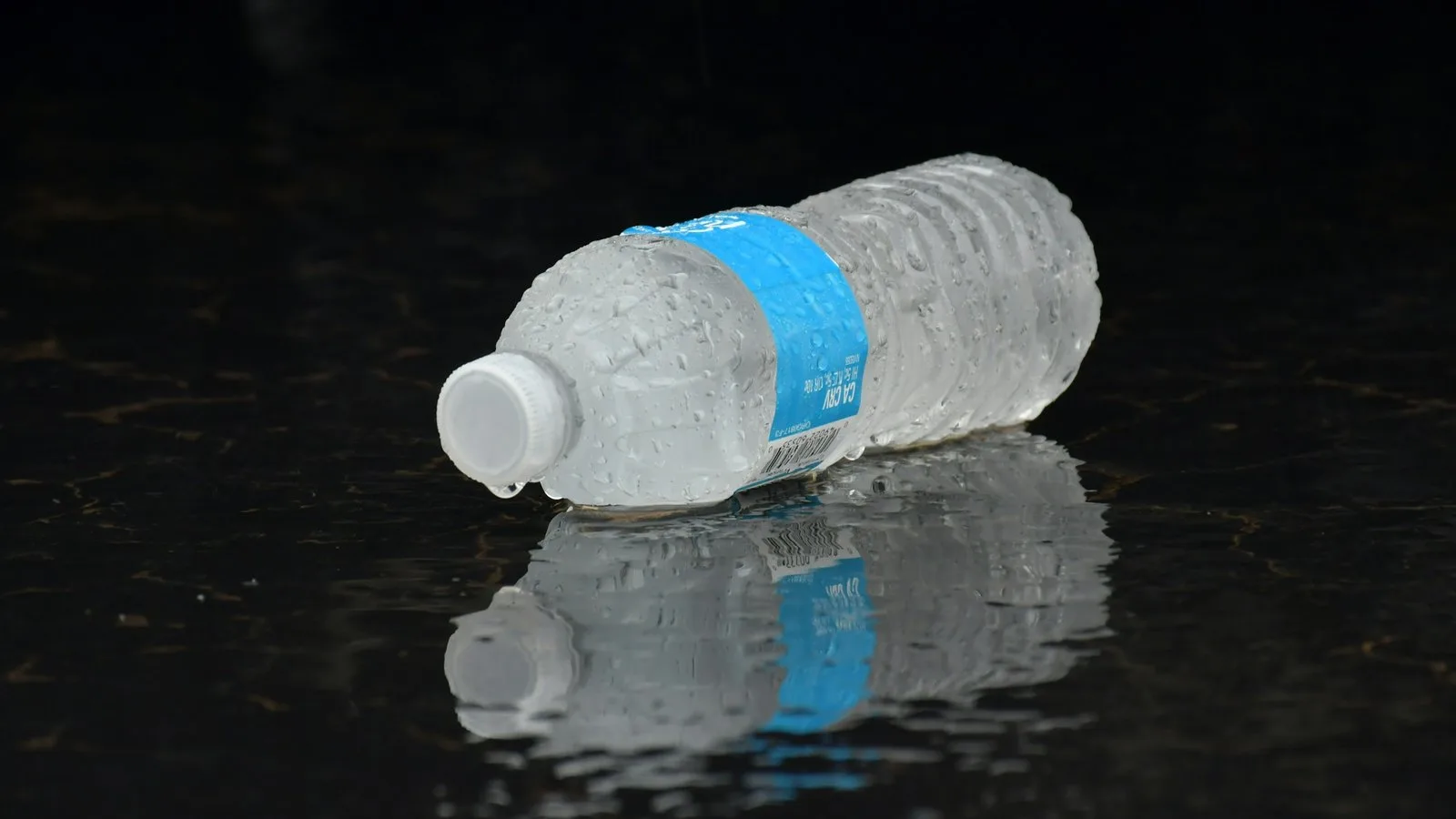
In short: mineralisation (TDS) shows how much salt is dissolved in a litre, pH shows acidity, and the water type tells you whether it is table, medical table or medicinal water.
What do mineralisation and TDS on the label mean?
Mineralisation is the sum of all dissolved salts in a litre; in English it appears as TDS, total dissolved solids. Under GOST R 54316-2020, water below 1 g/l counts as fresh and is sold as table water, 1 to 10 g/l is medical table water, and above 10 g/l is medicinal. Under EU rules, water below 50 mg/l has a very low mineral content, below 500 mg/l a low one, and anything above 1,500 mg/l is described as rich in mineral salts. The label normally carries a range rather than a single number.
- TDS is the total of dissolved solids, given in mg/l or g/l
- The scale: up to 1 g/l table, 1–10 medical table, above 10 medicinal
- The label gives a range, not one number: the composition of a natural water shifts a little
pH: acidic, neutral, alkaline
pH measures acidity: 7 is neutral, lower is acidic, higher is alkaline. Russia's SanPiN 1.2.3685-21 allows drinking water a pH of 6 to 9, EU Directive 2020/2184 allows 6.5 to 9.5, and Thailand's regulation on prepackaged water sets a ceiling of 8.5. Within those limits pH affects taste, not quality, so this single line will not tell you whether a water is good.
- The neutral zone is 6.5–7.5
- Alkaline means a pH above 7.5, which says more about taste than about benefit
- pH alone will not tell you whether a water is good
Ionic composition
Below the mineralisation comes a table of ions: calcium, magnesium, sodium and potassium, bicarbonates, sulphates and chlorides. Any of them above 20% in equivalent terms lends the water its name, hence "bicarbonate-chloride sodium" or "sulphate-bicarbonate". For an everyday water, look at two lines: total mineralisation and sodium. Under EU rules a water with less than 20 mg/l of sodium is suitable for a low-sodium diet.
- Cations and anions: Ca, Mg, Na, K, HCO₃, SO₄, Cl
- The dominant ions give the water its name: bicarbonate, sulphate and so on
- For an everyday water, look at the sodium and the total mineralisation
What else to check
Composition is not the only thing worth reading. The well and the deposit show that the water is natural rather than made from tap water. The bottling date and the shelf life matter more than you might think: glass usually keeps water for 12 months, PET for less. An imported bottle in Thailand carries a Thai sticker with the อย. registration and the importer's details, and without one the bottle is best left on the shelf.
- The well and the deposit
- The bottling date and the shelf life
- Thai registration (อย.) on imported water
Sources
- GOST R 54316-2020: classification of waters by mineralisation (table 1)
- Directive 2009/54/EC, Annex III: composition claims on mineral water
- SanPiN 1.2.3685-21: drinking water parameters, tables 3.5 and 3.13
- Directive (EU) 2020/2184 on the quality of water intended for human consumption
- Thai Ministry of Public Health Notification No. 462 (2025) on prepackaged drinking water