−10%
Drinking water 18.9 L90 ฿per bottle
How to choose · 6 min · 17 September 2026
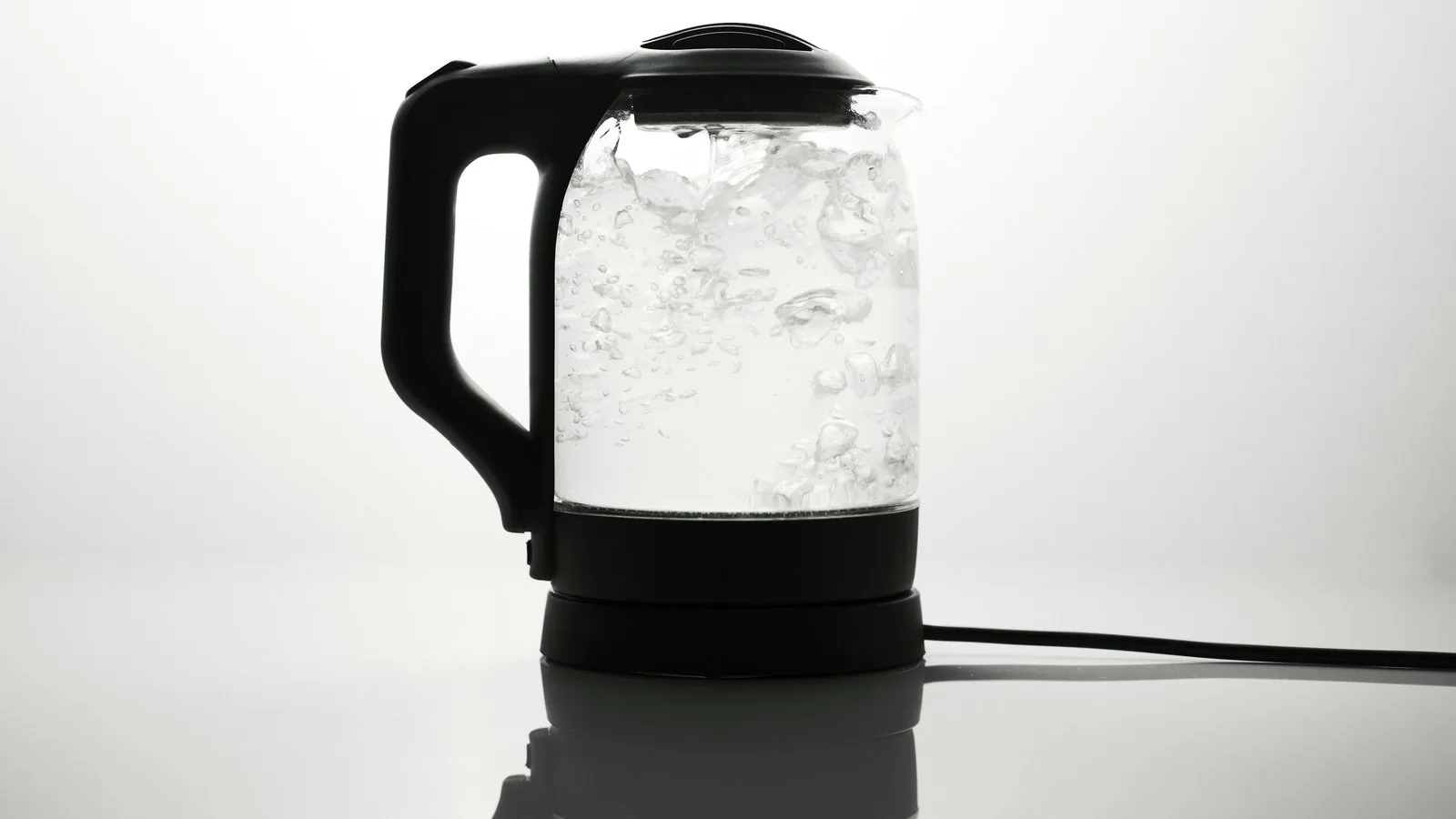
White deposits in the kettle are a readable signal.
In short: hardness is the amount of calcium and magnesium in the water. Limescale in the kettle, streaks on glassware and squeaky hair after a shower all mean hard water. For drinking and for appliances in Phuket, most people use bottled water with low mineralisation and fit a filter for the shower and the washing machine.
Hardness is calcium and magnesium in the water. When heated they precipitate and settle on the walls of the kettle, the water heater and the coffee machine. The hotter and harder the water, the faster the layer grows, so appliances use more electricity and fail sooner. For comparison: Russian tap-water standards allow hardness up to 7 mEq/L, while the Thai standard for water in sealed containers is 100 mg/L of calcium carbonate, which is only 2 mEq/L.
Three checks that cost almost nothing. The kettle: white deposits within a couple of weeks mean hard water. Soap: poor lather and a film left behind is the same signal. Then you can pick up a TDS meter from a hardware shop, which works out mineralisation from conductivity and gives you a rough picture. Hardness test strips are more precise, cost very little and are sold in Phuket. A lab analysis is worth it if your villa runs on well water.
Split the jobs. For drinking and coffee, use bottled water with a known composition, because the figures on its label do not change with the season. For the shower and the washing machine, fit a household filter or a whole-house softener. Descale appliances on a schedule rather than when the kettle stops heating, since a thin layer comes off more easily than a thick one. Well water at a villa is worth testing separately, as it can be noticeably harder than mains water.
Hard water mutes the acidity of coffee and makes tea look cloudy, with a film on the surface. Very soft water is no ideal either: the taste comes out hollow, because there is nothing to draw the flavour out of the bean or the leaf. The sweet spot for coffee is a mineralisation of roughly 75 to 150 mg/L with moderate hardness. For exact numbers, check the label of the batch, since the composition of natural water is given as a range.